
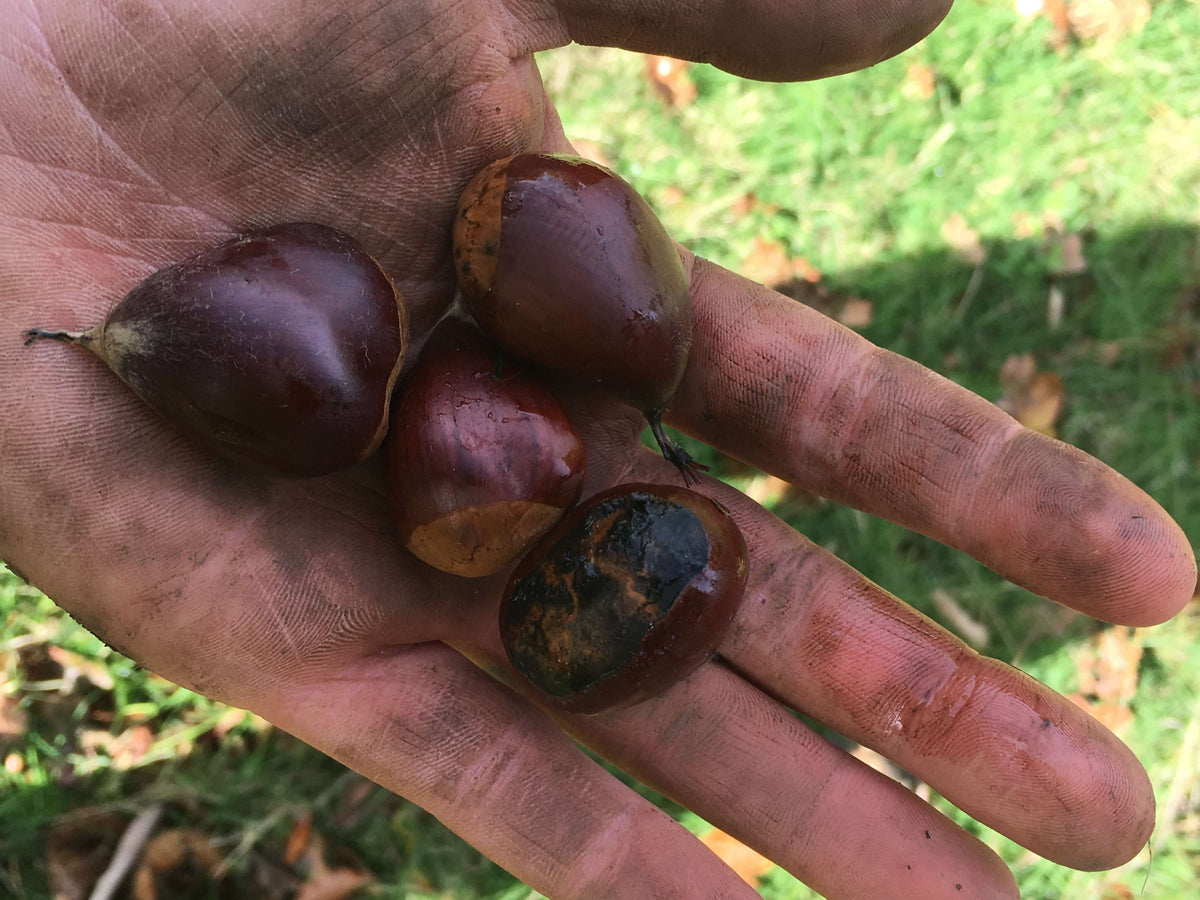
The top of the harvest.
Every year, a small share of our chestnut harvest comes in larger than the rest — easier to peel, more dramatic on a plate, and simply rarer. We set those aside, call them "Big Mama's" and make them available, in limited quantity, while they last.
These are graded and shipped the same way as the rest of our crop: harvested on our Sacramento family farm and grown without synthetic pesticides or fertilizers. The only difference is their size.
Because Reserve quantities are small and tied to what nature gives us each season, this listing may sell out well before our standard chestnuts do. If you're planning a holiday table centerpiece or a gift box worth bragging about, this is the one to order first.
What to expect
- Shipped right after harvest
- Grown without synthetic pesticides or fertilizers on our Sacramento, CA farm
- Ships nationwide (yes, even to California, Oregon, and Washington)
- Naturally gluten-free, low in fat, and not a tree nut allergen (Source: FDA)
Storage tip: Refrigerate in a mesh or paper bag for 2–4 weeks, or freeze raw (scored) for 3–4 months. Don't leave at room temperature for more than a few days — these are fresh, not dried, so they behave more like produce than a shelf-stable nut.
Harvest season runs September through November. Because we ship fresh rather than pulling from storage, availability is tied to the season — join our waitlist at the bottom of the page to be the first notified when each fall's harvest opens.
New to cooking with fresh chestnuts? Check out our recipes for roasting, soups, and stuffing.
Most "Fresh" Chestnuts Aren't
Here's what actually happens between harvest and the store shelf... and why ours never goes through it.
American chestnut orchards produce less than 1% of the world's chestnut supply. The USDA doesn't even track exactly how much of what's on U.S. shelves is imported versus grown here, but with domestic production that small, most of it has to come from somewhere else, commonly Italy, China, South Korea, or Turkey.
Chestnuts are a fresh, high-moisture crop, closer to a vegetable than a dried nut, they have to be kept near freezing the entire way, and commercial cold storage can hold them for four to six months after harvest just to survive the trip. That means the "fresh" chestnuts on a store shelf may have been picked months ago, spent weeks in transoceanic shipping, and then sat in a refrigerated warehouse before making it to the store or your house.
Along the way, those nuts are typically peeled, chemically treated (fumigated), & packed plastic. Our nuts skip that chain entirely. Every chestnut we sell is grown on our own farm in Sacramento and shipped straight to your door within days. No fumigation, no peeling, no import supply chain, no long-term storage, and no plastic packaging.
| Most Chestnuts in the U.S. | The Dusty Nut | |
|---|---|---|
| Origin | Imported — commonly Italy, China, South Korea, or Turkey | Grown on our own farm in Sacramento, CA |
| Growing Method | Varies; typically large-scale conventional orchards | Regenerative, Organic |
| Distance Traveled | Thousands of miles, often by ocean freight | A few hundred miles at most |
| Storage After Harvest | Commercial cold storage, commonly multiple months | Days |
| Time From Harvest to You | Weeks to months | Days |
| Packaging | Plastic bags | No plastic |
| Who Grew It | Pooled from multiple, often unnamed growers | One family farm, tree to doorstep |
